
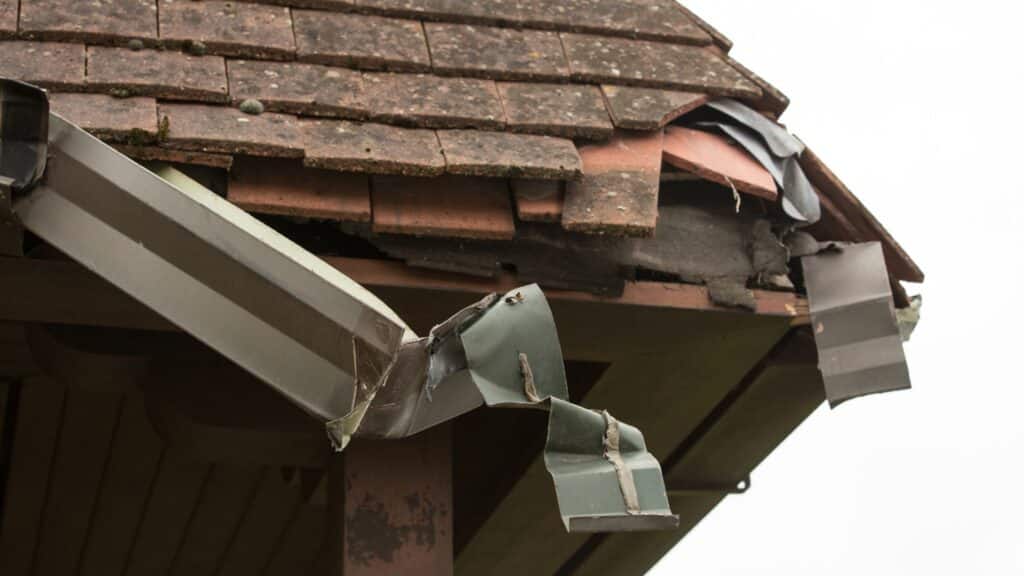
Every year, countless Ohio homes suffer damage from hail, strong winds, tornadoes, and other types of severe weather. This kind of damage can not only lead to leaks but also problems with mold and mildew if not addressed promptly. But there are several steps you’ll want to take when your roof has suffered storm damage to help limit subsequent damage and ensure you are able to successfully file an insurance claim to cover the damage.
To help, we’ll walk you through the entire process below, starting from the moment the weather clears and continuing through settlement and having the repairs completed.
First Things First: Keep Yourself and Your Family Safe
While roof damage is clearly something you need to address promptly, it is critical that you keep yourself and your family safe – that should always be priority number one.
This means you should never venture outdoors during severe weather. If your roof suffers significant damage, simply move to an interior room on the lowest level of your home and wait for the weather to clear. Don’t try to go outside and inspect the damage or make repairs while it is still raining or the wind is strong.
And even once the storm clears, it is important to proceed cautiously. Watch for debris that may fall off your roof and stay off of ladders until everything is dry and the possibility of lightning has completely passed.
Initial Exterior Inspection
Once the weather has returned to normal and it is safe to do so, you can go outside and complete a ground-based inspection. Never venture up onto your roof; it’s simply too easy to fall off and suffer catastrophic injuries. This is particularly true following storms, as there may be damage that’s not visible, and the roof will likely be slick.
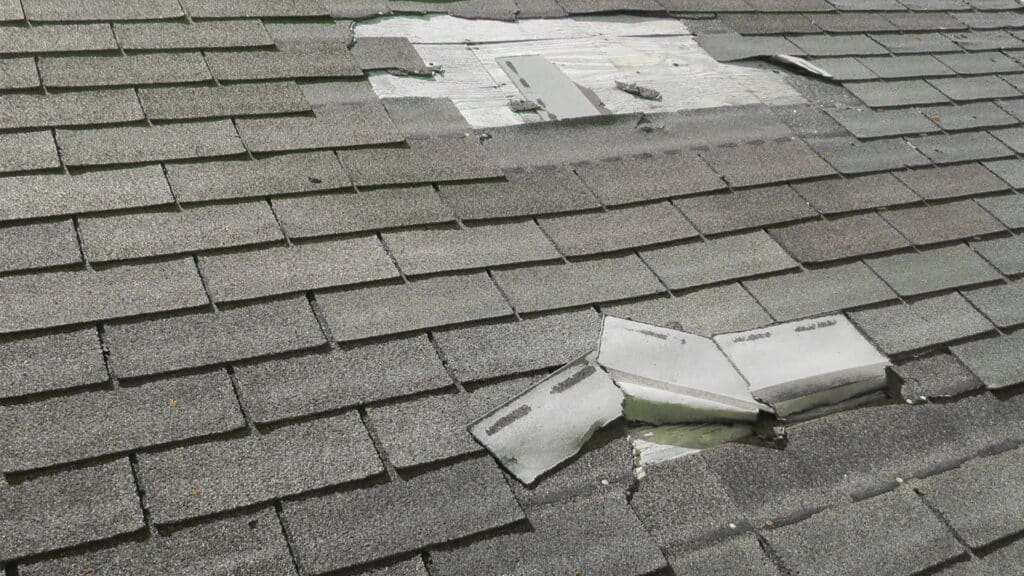
However, you can walk around the ground around your house and look for signs of damage. Be sure to check all the roof surfaces you can see, which means you’ll need to walk completely around your home during the process. A pair of binoculars will likely prove useful, as it may be hard to spot small signs of damage with the naked eye.
Initial Interior Inspection
After looking at your roof from the outside, you’ll want to turn your attention indoors and check for any signs of damage there, too. Look for things like visible leaks and damp ceilings or walls. Check your floors too, as leaks are sometimes temporary, meaning that you won’t see the water dripping down from the ceiling, but you may see water pooling on the floor.
Once you’ve given your home a once-over, head up to the attic and bring a flashlight with you. Start by looking around for similar signs of water damage or leaks. Once you’ve done so, turn out the attic light (while keeping your flashlight handy in case you need it) and look up at the roof, scanning for places where you can see light shining through. These kinds of places may indicate that there is a hole in your roof.
Document the Damage
If you see any damage to your roof (whether from inside or outside), go ahead and document it as best you can with your phone’s camera. Just remember that you shouldn’t walk on the roof to do so. You can use a ladder to get closer to the damaged areas if it is safe to do so, but avoid actually climbing on the roof – it’s simply too dangerous.
Be sure that the photos are in focus, and they clearly display the damage. And if you see water actually dripping, you may want to record a video of it, so that there will be no doubt.
Once you’ve collected the photos and/or videos, be sure to save them in a secure place. You may even want to email them to yourself as a backup.
Protect Your Home from Further Damage
Once you’ve documented the damage your house has sustained, you’ll want to take immediate action to protect your home from further damage. In fact, it is important that you take all the reasonable steps possible to prevent further damage, or you may run into issues with your homeowner’s insurance company.
However, the most common type of protection homes will need in this case is roof tarping to cover holes or prevent leaks. And as we’ve already explained, homeowners should not walk on their roofs – that’s a job for professionals. So, you’ll want to contact a roof-tarping business or a trusted roofing contractor to complete this work as soon as is possible.
Contact a Roofing Professional
Many homeowners would think that this is the point at which they should contact their homeowner’s insurance company and begin initiating a claim. And while you can do that (and many people do), you may find that the entire process proceeds more smoothly if you instead reach out to an expert roofing company, which can help you navigate the claims process.
You probably haven’t filed many insurance claims before, but expert roofers — like the professionals at DM Roofing, Siding, & Windows — do so all the time. In fact, we can often help ensure you get the maximum settlement offer and lay out the kinds of repairs you’ll need to have completed.
Notify Your Insurance Company
Once you’ve secured the counsel of a competent roofing professional, it is time to initiate the claims process. The exact process will vary from one insurance company to the next, but you (or your roofer) will generally fill out and submit a claims form detailing the damage your roof suffered.
You’ll typically want to include all of the documentation (photos or videos) you’ve collected, explain the mitigation steps you took, and provide the name and contact info for the roofer you’re working with. The insurance company will then take a few weeks or months to process your claim before returning with a settlement offer.

Schedule the Repairs Promptly
Because the insurance process often takes quite a while, you’ll want to act promptly once you receive your settlement offer. So, contact your roofer, discuss the repairs you’ll need to have completed, and then schedule them to start working as soon as possible.
The actual repairs may take only a matter of hours if the damage is minor, or they may require weeks of work if you’re looking at a complete tear-down and roof replacement. In either case, just be sure that the roofer you’re working with is licensed and completely insured.
General Tips for Storm Damaged Ohio Homes
We’ve laid out the basic course of action you’ll want to take above, but there are several things you’ll want to do at various points in the process to help get the best value and reduce the chances that your home will suffer similar damage in the future.
A few of the most important things to do include:
- Select impact-resistant shingles. Hail can rip many low-cost shingles to shreds, so consider upgrading to Class 3 or Class 4 shingles, which are designed to withstand the kind of abuse hailstorms can dish out.
- Ensure that your roof is properly insulated. Quality insulation and underlayment can help protect your roof from wind damage and prevent your shingles from being torn off in high winds.
- Upgrade your roof’s flashing. High-quality metal flashing provides superior protection against leaks near your chimney, vents, and roof valleys – even during torrential downpours.
- Keep your gutters clean. Gutters that are full of leaves, twigs, shingle granules, and other debris can fill up and eventually cause water to seep under your shingles, increasing the risk of significant damage during storms.
- Trim overhanging trees. Strong winds often rip branches completely off of trees, where they can end up falling on your roof, damaging your shingles or even the roof decking, if the branches are large enough.
- Secure loose items around your home. Wind can also pick up items lying around your house (including everything from your kids’ toys to lawn tools to patio furniture) and send them crashing into your roof or siding.
- Schedule regular roof inspections. Many times, small roof defects can be fixed quite affordably, but if they’re left unattended, a storm can cause them to become much bigger problems that are more expensive to repair.
Storm Damaged Roofs in Ohio: FAQ
Still have questions about having your roof repaired after a storm? Curious about how the process works? We’ve answered some of the most common questions we hear from our clients below!
What should you do if your roof is damaged in a storm?
Start by ensuring the safety of your family – that’s always your first priority. After that, you’ll want to assess the damage and document any that you discover (this includes damage noticed inside your home or that which you notice while conducting a ground-based inspection from the outside). Once you’ve done this, you’ll want to protect your home from further damage and then contact a professional roofer.
After you’ve spoken with the roofer, go ahead and contact your insurance company and start the process of making a claim. Once you receive a settlement offer, contact the roofer and schedule the repairs to be initiated as soon as you can.
Does insurance cover roof damage from storms?
In most cases, homeowners’ insurance will cover damage caused by wind, and many policies will also cover damage caused by hail. But to be sure, you’ll need to check your insurance policy carefully and consult with a licensed roofing professional.
How much is it to replace a roof in Ohio?
The cost of replacing a roof varies based on a variety of factors, including the materials used, the size and complexity of your roof, and the cost of living in your geographic area. With that said, the average roof replacement costs for an average (1,800-square-foot) home in Ohio are between about $10,000 and $13,000.
Who do you call if you have roof damage?
Following a storm, your first call should be to a trusted roofing company who can help provide guidance during the insurance claim process. This can not only help provide leverage when negotiating with the insurance company, but it may also help protect you from making mistakes that many homeowners make.
How long do you have to make a claim after a storm?
Different policies impose different timelines for submitting an insurance claim. So, check your policy to be sure. But because the claims process can be quite long and drawn out, it is always important to initiate it as quickly as you can following a consultation with a roofing professional. This will help kickstart the process and reduce the length of time your home remains vulnerable to water damage.
Why should you call a roofer before your insurance company?
A professional roofer can inspect your roof and ensure that you include all of the damage sustained. This will help prevent you from submitting a claim that only covers a small portion of the total costs you’ll pay. It also provides leverage in some cases and gives you someone you can trust for guidance.
What is the average deductible for storm-damaged roof repairs?
Every policy is unique, so the only way to know for sure is to review the information provided by your insurance company. However, as a general rule, the deductible is usually between 1% and 5% of the total insured value of your home. In other words, if your home is insured for $100,000, your deductible will likely be between $1,000 and $5,000.
Contact DM Roofing Siding & Windows for Storm Damage Roof Repairs!
If your roof has become damaged by a recent storm or you’d like to have it inspected, contact the professionals at DM Roofing, Siding, & Windows. We’ll carefully examine your roof and outline the repairs you’ll need carried out. We’ll even help to file a claim with your homeowner’s insurance company and ensure that you get fair compensation.
Contact us today to get started!